

Introduction
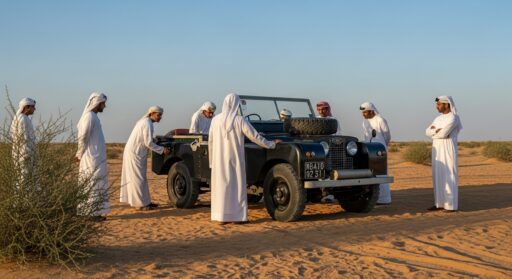
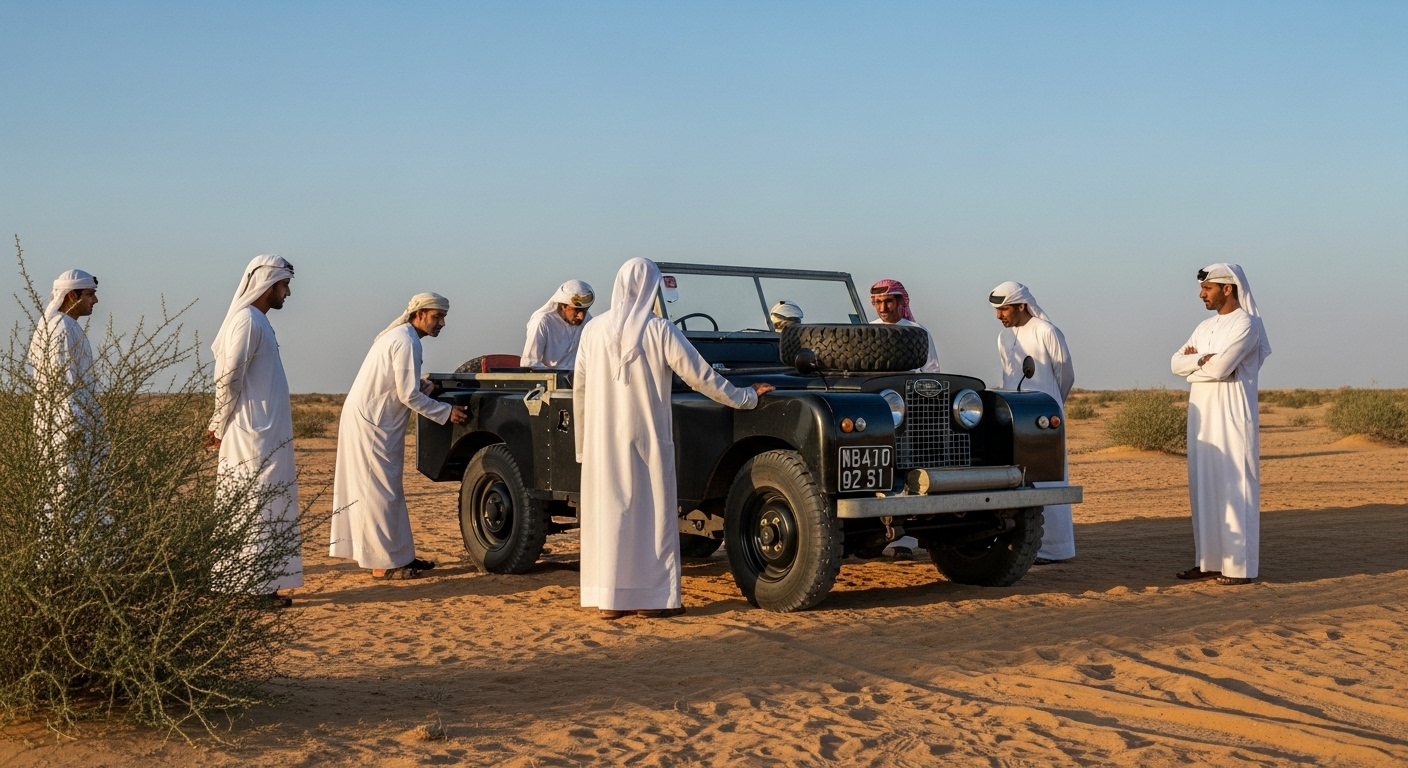
In the history of transportation, few objects carry the symbolic weight of the first automobile. In the Trucial States, the arrival of the first car was not just a novelty; it was a seismic event that heralded the end of one era and the beginning of another. This machine, a stark contrast to the camel and the dhow, represented a new kind of speed, power, and connection to the modern world. The story of the first car is a microcosm of the profound transformation that would soon sweep across the region, foreshadowing the UAE’s headlong rush into the 20th century.
History
The exact details are shrouded in some legend, but it is widely believed that the first car arrived in the Emirate of Dubai in the late 1940s or very early 1950s. It was reportedly a Chevrolet or a Plymouth, imported by a wealthy Lebanese or Syrian merchant. The vehicle caused a sensation. With no paved roads, it was driven along the hard-packed sand of the beach and the wider tracks of the desert. Its arrival predated the discovery of commercial oil, showing that the desire for modernization was already present. The ruling Al Maktoum family, particularly the forward-looking Sheikh Rashid bin Saeed Al Maktoum, quickly recognized the automobile’s potential, and soon, a small but growing number of vehicles began to appear on the tracks of Dubai and other coastal towns.
Key Features
The introduction of the automobile was a disruptive technological event:
- A Machine of Concrete and Steel: In a world of organic materials—wood, wool, and camel hair—the car was an alien object of metal, glass, and rubber. Its internal combustion engine was a source of both wonder and noise, a stark contrast to the silent desert.
- Freedom from Geographic Constraints: While initially limited to the flat, hard surfaces, the car offered a new kind of freedom. It could travel faster and carry more than a camel, shrinking perceived distances between settlements.
- The Challenge of Infrastructure: The car’s arrival immediately created a demand for supporting infrastructure. The first “mechanics” were often local blacksmiths who had to learn entirely new skills. The need for fuel, spare parts, and eventually, proper roads, began a cycle of development that would accelerate rapidly.
- A Status Symbol: Initially, car ownership was a clear marker of wealth and status, separating the modernizing merchant and ruling classes from the rest of the population.
Cultural Significance
The first car was a powerful symbol of the future. It represented a break from the slow, rhythmic pace of life dictated by animals and sailing seasons. For the younger generation, it was an object of fascination and aspiration, a tangible connection to the modern world they saw in magazines and heard about from travelers. For the older generation, it was perhaps a bewildering and disruptive force. Its arrival signaled that change was not just coming; it had already arrived, parked on the beach. The automobile began to reshape social interactions, making visits between distant families and communities easier and more frequent.
Modern Relevance
The first car was the seed from which the UAE’s entire modern transportation ecosystem grew. The need to accommodate it led directly to the paving of the first roads, which in turn fueled urban expansion and economic integration between the emirates. The car culture that began with that single Chevrolet or Plymouth has evolved into a national passion for luxury and high-performance vehicles, with the UAE now having one of the highest car ownership rates in the world. The story of the first car is a foundational myth of the nation’s modernization, a reminder that the UAE’s current love affair with technology and speed has very humble and recent beginnings.
Conclusion
The first car in the Emirates was more than a machine; it was a prophet on wheels. It stood as a silent announcement that the age of isolation was over. Its tracks in the sand were the first, faint lines of a new map that would be drawn in asphalt and concrete. From that single vehicle, an entire nation of highways, bridges, and tunnels would eventually emerge. The journey of that first car, bumping along the shoreline, encapsulates the UAE’s entire modern story: one of embracing the new, overcoming the limitations of the environment, and accelerating at an astonishing pace toward a future that was once unimaginable.