

Introduction
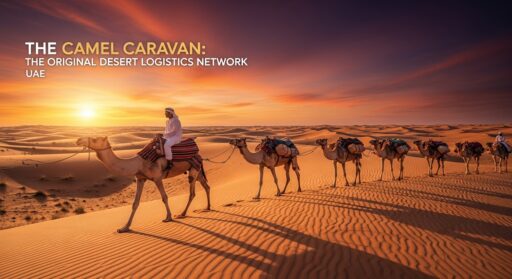
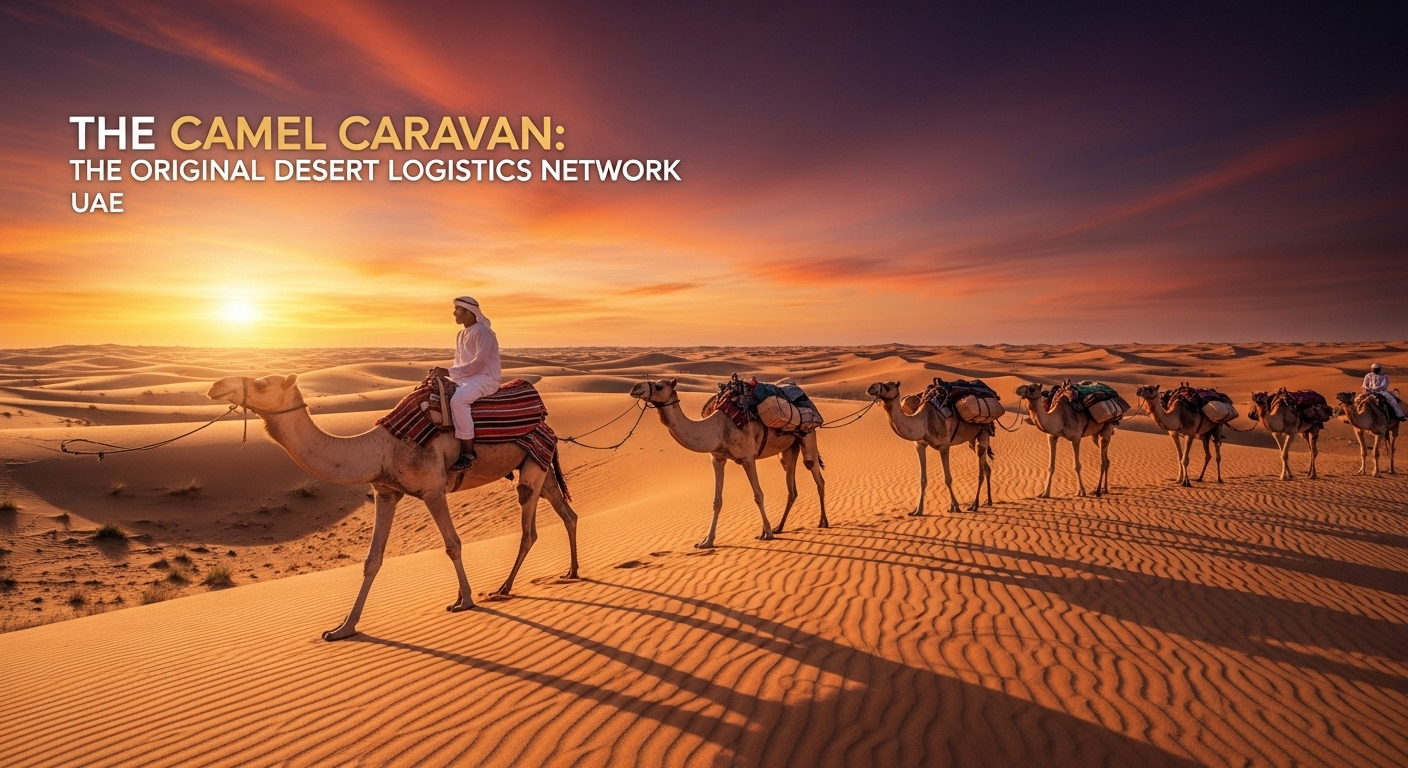
Long before the first paved highway cut across the desert, the most sophisticated and reliable logistics network in the Arabian Peninsula moved on four legs. The camel caravan was the lifeblood of the region’s economy and culture, a slow but steady river of trade and communication that connected the interior oases to the coastal ports and linked the Arabian Peninsula to the wider world. The camel, as the “ship of the desert,” was not merely a beast of burden but the central pillar around which a complex system of trade routes, rest stops, and social codes was built, forming the original infrastructure of the land that would become the UAE.
History
The use of camel caravans dates back thousands of years, with their peak during the heyday of the incense trade around 1000 BCE to 200 CE. Frankincense and myrrh, harvested in southern Arabia, were transported by camel north to markets in Mesopotamia, the Levant, and the Mediterranean. Throughout the Islamic Golden Age and into the modern era, these caravans remained essential. They transported dates from the oases of Al Ain and Liwa to the coast, returning with goods from India and Africa that arrived via dhow. The caravan routes were not random paths but well-established tracks, passed down through generations, with knowledge of water sources (aïn) and grazing grounds being a matter of survival and commercial success.
Key Features
The camel caravan system was a masterpiece of pre-industrial logistics:
- The Camel’s Adaptations: The dromedary camel was uniquely suited for the task. Its ability to travel for days without water, carry heavy loads (up to 300-400 kg), and traverse soft sand made it the only viable long-distance land transport.
- Organized Routes and Schedules: Caravans followed specific routes between major nodes like Al Ain, Liwa, Buraimi, and the coastal cities. Their schedules were often timed with the seasons to avoid the extreme summer heat.
- The Caravanserai: Along the major routes, rest stops known as caravanserais provided shelter, food, and water for the merchants and their animals. These were hubs of exchange and information, where news and goods from different regions would be shared.
- The Caravan Leader (Qafilabashi): The journey was led by an experienced guide who knew the desert intimately—its landmarks, hidden wells, and potential dangers from both the environment and raiders.
Cultural Significance
The camel caravan was far more than a transport system; it was a social and cultural institution. It was the primary vector for the exchange of not only goods but also ideas, news, and cultural practices between the interior and the coast, and between the Arabian Peninsula and the outside world. The caravan life fostered values of endurance, cooperation, and trust. The merchants and guides who led these caravans were respected figures, and their safe arrival was a cause for celebration. The rhythms of the caravan trade dictated the economic cycles of the region and reinforced the interdependence of the desert and coastal communities.
Modern Relevance
The legacy of the camel caravan is deeply embedded in the modern UAE’s identity and infrastructure. The ancient caravan routes often determined the location of the first modern roads and highways. The spirit of connectivity and trade that defined the caravans is the direct ancestor of the UAE’s modern role as a global logistics and air travel hub. The values of the caravan—reliability, endurance, and navigating challenging environments—are celebrated in modern Emirati culture through the continued reverence for the camel. Furthermore, the UAE’s current investments in overland trade corridors and logistics hubs can be seen as a high-tech, globalized revival of its historical role as a crucial link in regional and international trade networks.
Conclusion
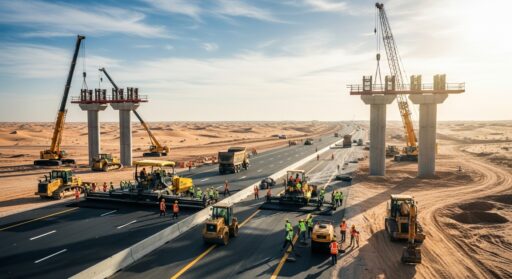
The camel caravan was the nervous system of ancient Arabia, a slow but resilient network that sustained life and commerce across a vast and unforgiving landscape. It represents a profound chapter in human adaptation and ingenuity. While the thunder of modern trucks on multi-lane highways has replaced the silent tread of camels in the sand, the fundamental purpose remains the same: to connect, to trade, and to overcome the challenges of geography. The story of the caravan is a powerful reminder that the UAE’s current status as a crossroads of the world is not a recent invention, but the latest expression of a millennia-old tradition of movement and connection.