

Introduction
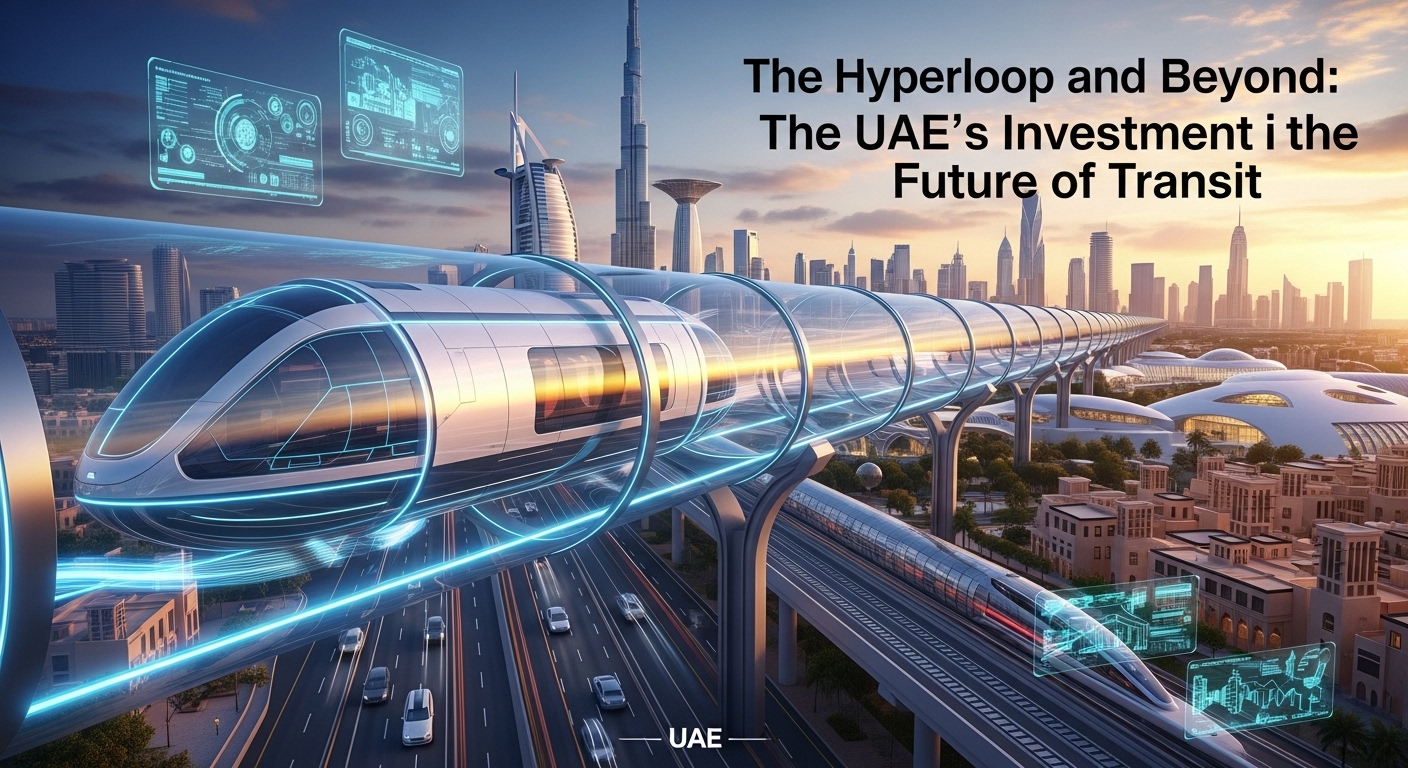
The UAE, having mastered the transportation paradigms of the present, is now actively investing in defining the future. At the forefront of this ambition is the Hyperloop—a proposed mode of passenger and freight transportation that would propel pods through a near-vacuum tube at airline speeds. The UAE’s engagement with this and other futuristic transit technologies, such as autonomous vehicles and flying taxis, is a strategic commitment to maintaining its status as a global leader in logistics and innovation. It signals a nation not content with simply adapting to change, but determined to drive it.
History
The UAE’s journey into future transit began with its successful execution of present-day megaprojects like the Dubai Metro. The Hyperloop entered the national conversation around 2016, when Dubai’s Roads and Transport Authority (RTA) signed an agreement with Hyperloop One (now Virgin Hyperloop) to explore the feasibility of a system connecting Dubai and Abu Dhabi. A prototype pod was tested in Dubai, and the concept captured the public imagination. While the commercial viability of Hyperloop is still being proven, the UAE’s involvement has provided crucial credibility and investment. Concurrently, the RTA has launched pilot programs for autonomous aerial vehicles (flying taxis) and begun planning for integrated, AI-managed multi-modal transport systems.
Key Features
The future of transit in the UAE is envisioned as a network of integrated, smart, and sustainable systems:
- Hyperloop: The core promise is speed. A Hyperloop link could reduce the travel time between Dubai and Abu Dhabi from over an hour by car to just 12 minutes, effectively merging the two metropolises into a single economic zone.
- Autonomous and Electric Vehicles: The UAE is a testing ground for self-driving cars and buses. The goal is a future where shared, autonomous, electric vehicles handle first- and last-mile connectivity, reducing congestion and pollution.
- Urban Air Mobility (UAM): Companies like Joby Aviation and Volocopter have conducted test flights in Dubai for their electric vertical take-off and landing (eVTOL) aircraft, aiming to create a network of “air taxis” to bypass road traffic.
- AI and Centralized Control: The future system will likely be managed by a central AI “brain” that optimizes the flow of all transport modes—metro, tram, bus, AVs, and UAM—in real-time, offering users seamless, on-demand mobility.
Cultural Significance
Investing in these futuristic technologies reinforces the UAE’s brand as a land of tomorrow. It captures the world’s attention and inspires a new generation of Emirati engineers, programmers, and entrepreneurs to think at the frontier of possibility. This forward-looking stance is a key part of the national identity, reflecting the leadership’s philosophy of relentless progress. It demonstrates a willingness to take risks on unproven technologies, echoing the same boldness that led to the construction of the world’s tallest building or the launch of a mission to Mars.
Modern Relevance
For the UAE, future transit is a strategic necessity. As its population and tourist numbers grow, current road infrastructure will face ever-increasing strain. Technologies like Hyperloop and UAM offer a solution to the physical limits of land-based transport. Furthermore, leading in this sector creates new high-tech industries and jobs, aligning perfectly with the UAE’s economic diversification goals. By being an early adopter and testing ground, the UAE positions itself as a global hub not just for trade, but for transportation innovation, attracting talent, investment, and partnerships from around the world.
Conclusion
The UAE’s investment in the Hyperloop and beyond is a declaration of intent for the next 50 years. It is a commitment to solving the perennial challenges of urban mobility with technology and vision. While the full realization of a Hyperloop network or a fleet of flying taxis may still be years away, the very act of pursuing them shapes the present, driving innovation and solidifying the UAE’s reputation as a laboratory for the future. In the UAE’s transportation narrative, the journey is never complete; the destination is always the next horizon, the next breakthrough, the next way to move faster, smarter, and more efficiently into a world of its own making.